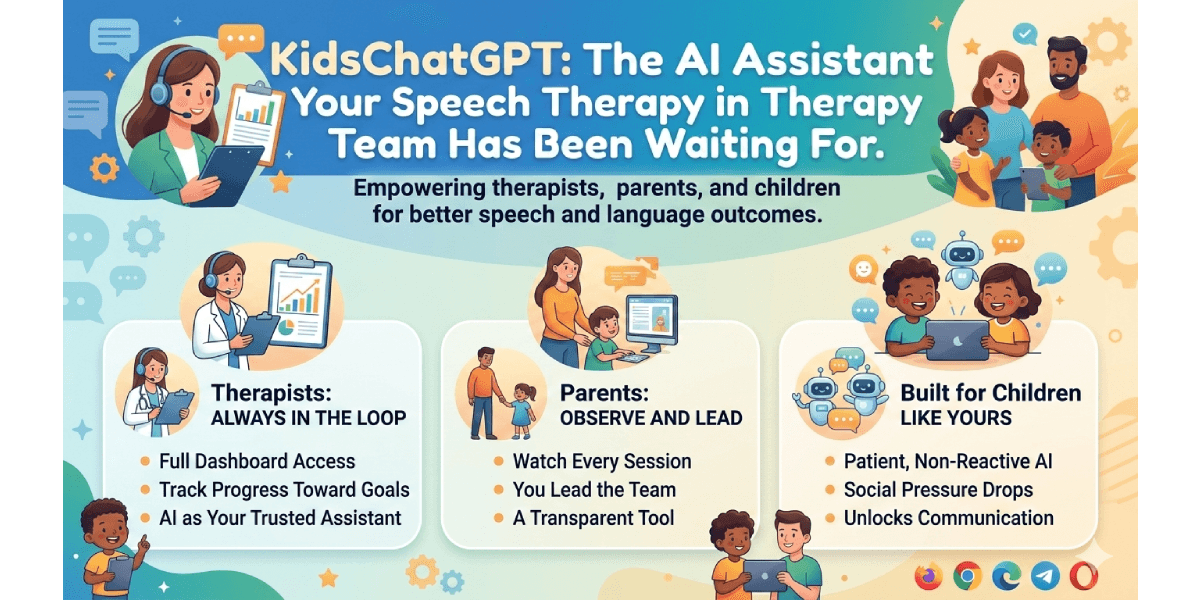
1. The therapist is always in the loop.
SLPs who use KidsChatGPT with their patients have full dashboard access. They can see session summaries. They can track progress toward goals. They can customize what the AI focuses on between sessions — and they can watch sessions if they want to. This isn't AI flying solo. This is AI working as the SLP's assistant, doing the between-session repetition work that no single human can do with 50 kids on a caseload.
2. Parents can watch everything — and we mean everything.
Your child uses this with you in the room if that's what you want. You can observe every session. You can stop it at any moment. You are not handing your child to a black box — you are adding a tool to a team that you lead. Because you will always lead that team. We are just trying to give you something to actually work with.
3. It was built for children like yours — not retrofitted for them.
Most AI tools for children are built for neurotypical kids and then labeled "accessible." KidsChatGPT went the other direction. It started as a general children's platform and then speech-language pathologists found it and showed us something: children who struggle to communicate with people sometimes communicate differently with patient, non-reactive AI. The social pressure drops. The judgment disappears. And something comes out that didn't come out before.