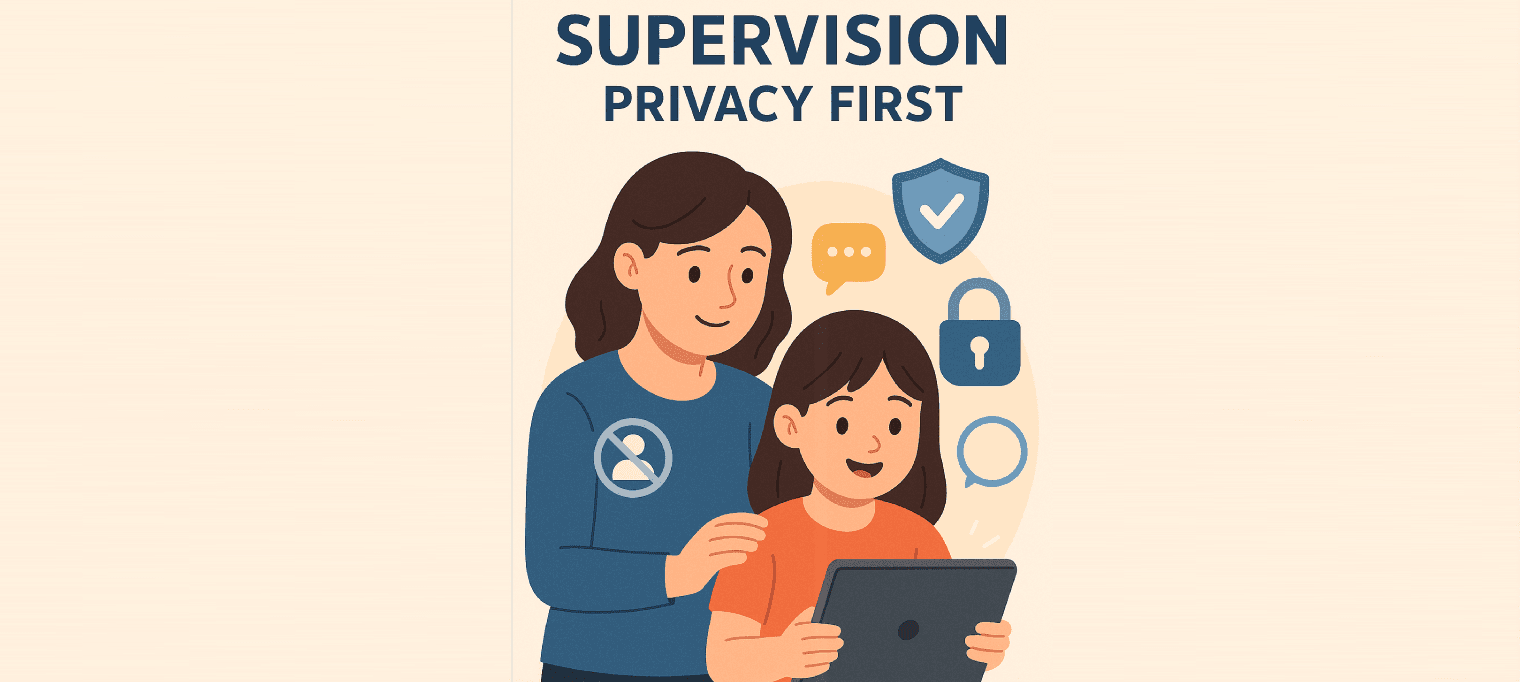
The Importance of Early Guidance in AI Interactions
When introducing your child to AI technology, initial supervision plays a crucial role in establishing healthy digital habits and building trust. At KidsChatGPT, we understand that parents want to guide their children's first experiences with AI while respecting their privacy and independence. Our unique approach to data handling makes this balance not only possible but natural.
Privacy That Protects Without Surveillance
Unlike other platforms that store conversations for analysis or improvement, KidsChatGPT operates on a zero-storage principle. This means that no one—not our team, not other companies, not even automated systems—ever sees or retains what your child says during their AI interactions.
This privacy-first design offers several important benefits:
- Complete conversational privacy: Your child's thoughts, questions, and creative ideas remain entirely their own
- No digital footprint: Nothing your child shares creates a permanent record that could affect them later
- Freedom to explore: Children can ask questions and express ideas without fear of judgment or long-term consequences
- Trust building: Parents can supervise initially without worrying about ongoing surveillance
- Age-appropriate independence: As children mature, they can use the platform privately with complete confidence
The Supervision Sweet Spot
Initial supervision serves multiple purposes beyond safety. It helps children develop critical thinking skills about AI interactions, teaches them to evaluate responses thoughtfully, and establishes healthy boundaries around technology use.
Effective supervision strategies include:
- Sitting alongside: Be present during early sessions to understand how your child interacts with AI
- Asking open questions: "What did you think about that response?" or "How might you use that information?"
- Modeling curiosity: Show enthusiasm for their questions and discoveries
- Setting time boundaries: Establish reasonable limits for AI interaction time
- Encouraging real-world application: Help them connect AI conversations to offline activities and learning
Building Digital Literacy Together
Supervision isn't about monitoring every word—it's about teaching children to be thoughtful digital citizens. When you know conversations aren't being recorded or analyzed, you can focus on what really matters: helping your child develop critical thinking skills and healthy technology relationships.
Key Learning Opportunities
During supervised sessions, children learn to:
- Evaluate AI responses for accuracy and relevance
- Ask follow-up questions that deepen understanding
- Recognize when they need additional sources or human guidance
- Balance AI assistance with their own creative thinking
- Understand AI's capabilities and limitations
The Transition to Independence
Because KidsChatGPT doesn't store conversations, the transition from supervised to independent use happens naturally. Parents don't need to worry about changing privacy settings, reviewing stored data, or wondering what conversations they might have missed. The privacy protection that exists during supervised sessions continues seamlessly into independent use.
This approach recognizes that:
- Children mature at different rates and deserve age-appropriate privacy
- Trust is built through transparency, not surveillance
- Healthy technology relationships require both guidance and independence
- Privacy is a fundamental right, not a privilege to be earned
What Makes Our Approach Different
Most AI platforms collect conversation data to improve their systems, which creates an inherent tension between child privacy and platform development. At KidsChatGPT, we've chosen a different path: we prioritize your child's privacy over data collection, even when it means we can't use conversations to optimize our technology.
This commitment means:
- No conversation analysis: We don't read, analyze, or learn from your child's interactions
- No behavioral profiling: We don't build profiles of your child's interests or patterns
- No data sharing: There's no data to share with third parties because we don't collect it
- No security risks: Data that doesn't exist can't be breached or misused
Expert Perspectives on Privacy and Development
Child development specialists emphasize that children need both guidance and privacy to develop healthy relationships with technology. Our approach aligns with expert recommendations by:
- Allowing natural supervision during the learning phase
- Respecting children's developmental need for private thought and expression
- Building trust through transparency about data practices
- Supporting the gradual development of digital independence
Starting Your Family's AI Journey
Beginning with KidsChatGPT means starting with trust. You can supervise your child's early interactions knowing that this supervision is about learning together, not about surveillance. As your child develops confidence and digital literacy skills, they can transition to independent use with the same privacy protections that were in place from day one.
We believe that AI should enhance family relationships, not complicate them with privacy concerns or trust issues. By choosing zero data storage, we've created a platform where supervision serves education and relationship-building rather than monitoring and control.
Ready to explore AI with your child in a truly private environment? KidsChatGPT makes it possible to provide guidance when needed while preserving the privacy and independence that children deserve as they grow and learn.