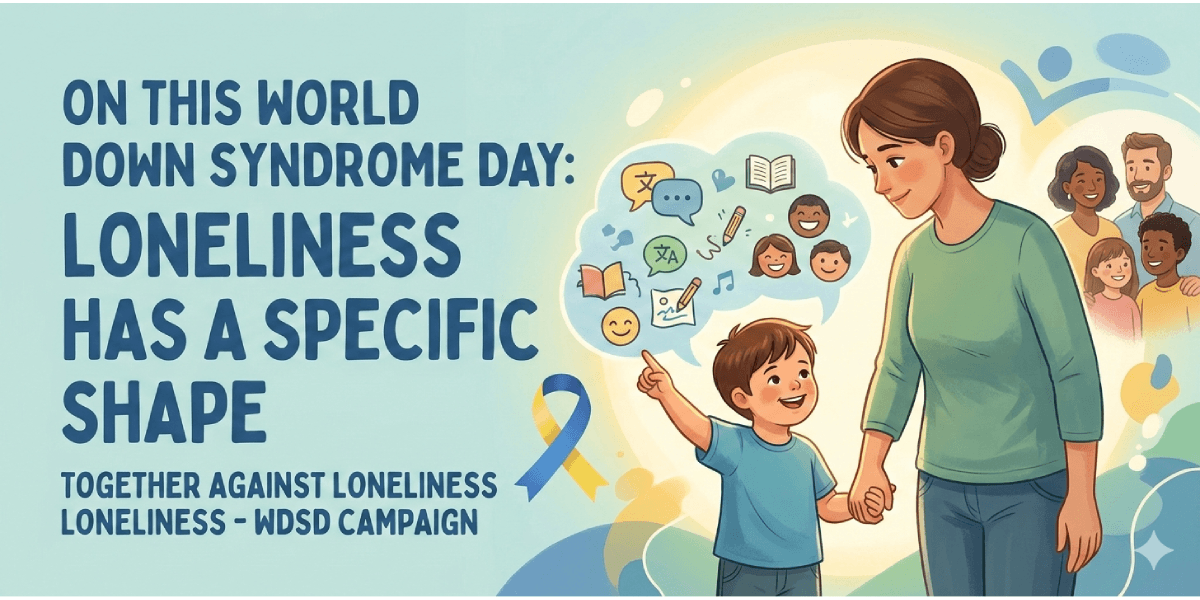
39% of people with intellectual disabilities report feeling lonely frequently. But the loneliness in this community isn't just one loneliness. It's layered.
Your child may be lonely in their communication — wanting to connect but not having the tools.
And you may be lonely in your parenting — doing something profound and invisible and exhausting, with fewer people around you who truly understand than you ever expected.
Both of those loneliness experiences matter. And both of them are the reason we exist.
We are not going to solve systemic underfunding of Medicaid. We are not going to fix the SLP shortage by ourselves. We are not going to replace the therapist your child needs more of.
But we can be there in the 10,020 minutes the therapist isn't. We can be the patient voice that never gets tired, never gets frustrated, never has to glance at the clock. We can give your child more repetitions, more responses, more practice — and give you more moments of watching your child communicate, instead of always being the one carrying the conversation.
And maybe, somewhere in that, a little of the loneliness lifts.
Because your child has a voice. We are just trying to help it find its way out.